Does Mercury Retrograde Change Your Sign?
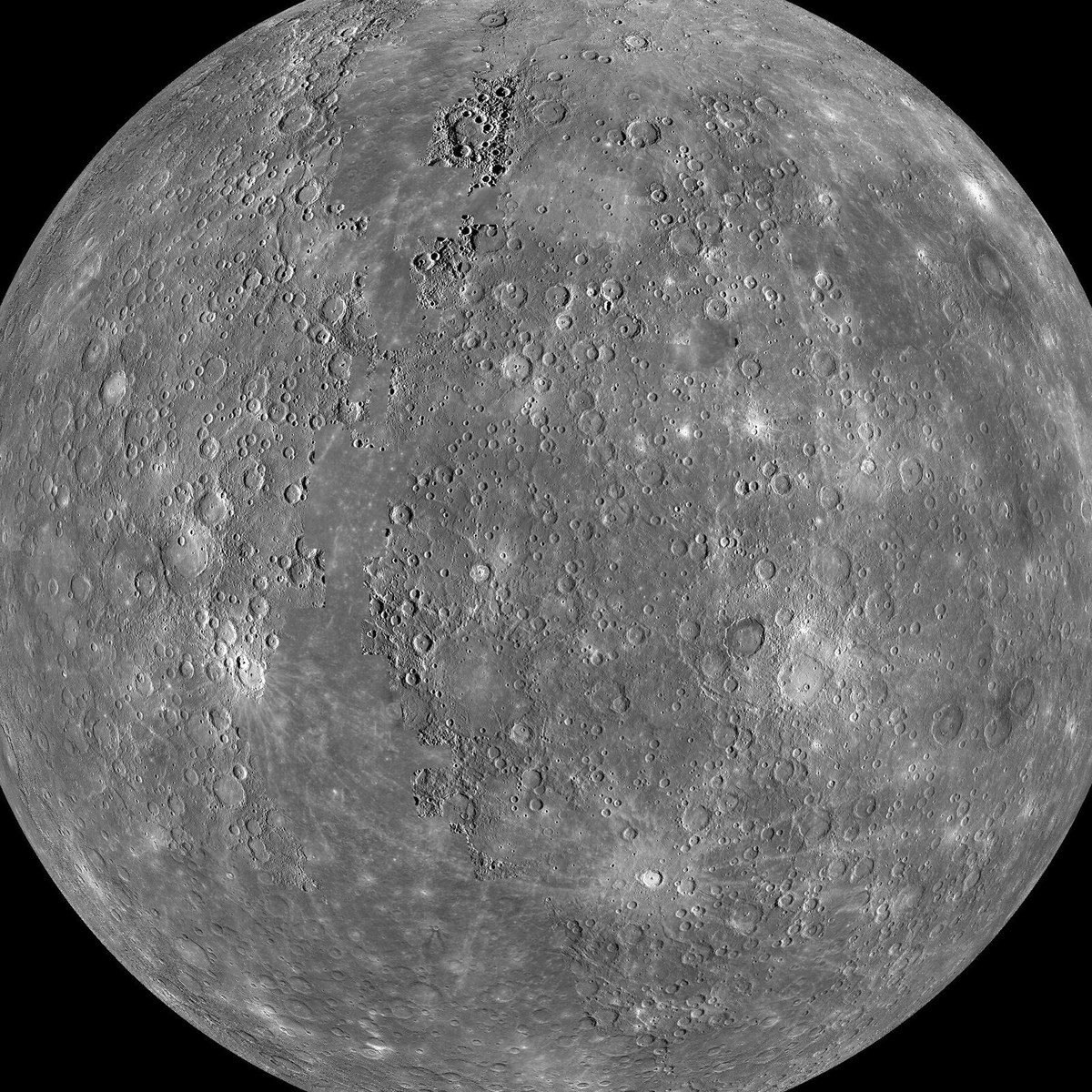
Mercury turns retrograde again in late October 2026, and every time it does the same three questions arrive. Does the loop change my Mercury sign? Is my chart recalculated? Should I avoid signing anything? The first two have a clean answer, and it has nothing to do with luck. A birth chart is a snapshot of one instant, and nothing that happens in the sky afterwards rewrites it.
What retrograde motion actually is
Mercury never reverses. It orbits the Sun in about 88 days, roughly four times faster than Earth, so every few months it laps us on the inside track. For a couple of weeks our viewing angle shifts enough that the planet appears to slide backwards against the background stars. Astronomers call it apparent retrograde motion, and every planet does it. Mars does it for around ten weeks every two years. Mercury simply does it more often, three or four times a year, which is the whole reason it gets the attention.
Nothing about the planet's actual path changes. It keeps moving forward the entire time. The reversal is in the line of sight, not in the orbit, and that distinction is what makes the next section straightforward.
Why the loop cannot change a birth chart
A chart is not a live feed. It is a set of positions for one instant, the moment and the place you were born, computed once and then fixed for good. When a calculator asks for your birth date, your city and your time, it is not asking what Mercury is doing now. It is asking where Mercury was then.
That is why running the same details through the Mercury sign calculator in the middle of a retrograde gives the same answer it gave in June. The current loop is irrelevant to the arithmetic. If your result does change between two runs, the cause is almost always an input: a different city spelling, a mistyped minute, or a year entered wrong.
The same holds for the Sun. Your zodiac sign calculator result does not drift because a planet is looping in the present tense. It is reading a fixed historical instant.
The snapshot idea, in one sentence
A birth chart answers where the sky was, and a transit answers where it is. Confusing the two is the single most common mistake people make when a retrograde starts trending.
The one way retrograde does touch your Mercury sign
There is an exception, and it is about birth rather than about today. Mercury slows, stops and reverses across the same band of sky twice, so a birth that falls inside a retrograde window can sit on or near a sign boundary more than once. On those changeover days the date alone has two possible answers, and the clock decides which one applies.
This is not the loop changing your sign. It is the loop making the birth moment ambiguous, which is a different problem with a practical fix. If your birthday lands on a boundary, you need a real birth time, and you need it to the minute.
How to tell whether you are on a boundary
Run the calculation with two times a few hours apart. If the sign holds, the date settles it and you are done. If it flips, you are on a changeover and the time you supply is doing real work.
Why the loop lasts about three weeks
The retrograde window for Mercury runs roughly 20 to 24 days. It is not fixed, because the orbit is noticeably elliptical, and the planet covers ground faster near perihelion than when it is further out. Near the Sun, the apparent reversal is shorter and sharper. Further out, it stretches.
This is also why published retrograde calendars disagree by a day at the edges. Different sources use slightly different station definitions and time zones. For finding a sign, none of that matters, because the birth instant is what the calculation uses. For reading a calendar, pick one source and stay with it.
If you were born during a retrograde
Nothing needs fixing. Some traditions read a retrograde Mercury in a natal chart as a mind that prefers to revise rather than announce, and that is an interpretation of a placement, not a defect to correct. Others say nothing at all about it. Either way, the sign is the sign. There is no "true" version waiting underneath.
What is worth avoiding is the idea that a natal retrograde is an error in your data. It is not. It is simply where the planet was, and the calculator reports it without comment.
What to check instead of the calendar
If a result looks wrong to you, the calendar is the wrong place to look. Check these instead.
- The year. A date on the edge of a sign gives different answers in different years, because the changeover moment shifts by hours across the calendar.
- The city. City search supplies latitude, longitude and the time zone, including the daylight saving rule that was in force on that date. A town that changed its rules in the 1990s will not behave like the capital.
- The time, on boundary days only. On ordinary days it changes nothing. On a changeover day it changes everything.
The method behind all of this is documented on the how we calculate page, including the accuracy limits that come with any chart.
Retrograde is not a forecast
A retrograde calendar is astronomy with a popular nickname. It tells you when a planet appears to reverse as seen from Earth. It does not tell you what will happen to your week, and it is not a reason to delay a decision.
CalcJournal keeps those two things apart on purpose. The daily note lives on horoscopes and is written for curiosity. The guides on this journal are about how the tools work and what the numbers mean. Neither of them is a prediction about your future, and neither changes when Mercury turns around.
Reading your own result
Get the four inputs right, date, city, time and year, and the rest follows. Start with the Sun sign from the date, then add the Moon and the rising sign if you want a fuller picture. The twelve sign pages hold the usual date ranges and the edge cases for each one.
Then let the retrograde go. It is a real optical event, it is worth understanding, and it has no vote in what your chart says.