Which Planet Rules Which Zodiac Sign
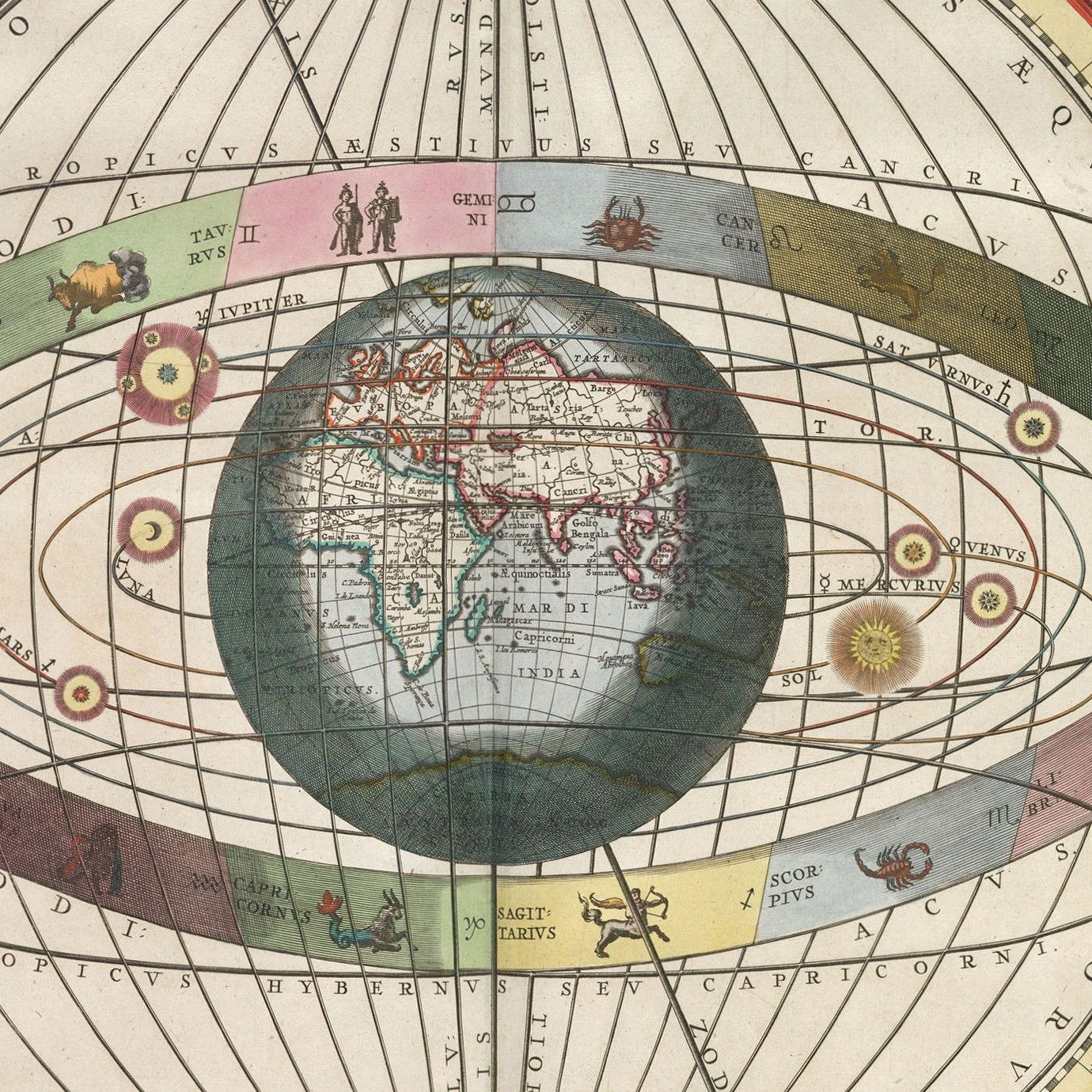
Every zodiac sign has a ruling planet, and the list is shorter than the number of signs. Seven planets cover twelve signs, so five of them rule two signs each. That overlap is the part most people miss, and it explains why Aries and Scorpio get such different descriptions even though the old books hand both of them to Mars.
What a ruling planet means
A ruling planet is the planet the tradition assigns to a sign. The idea comes from the old model of the sky, where each planet had a home among the signs, a place where its own nature was said to show most clearly. The Sun and the Moon counted as planets in that list, which is why the count is seven and not the five you can see with the naked eye.
The assignment is a description, not a calculation. Nothing in the arithmetic of a chart changes because a sign has a ruler. What the ruler gives you is a second layer of vocabulary, a way of talking about a sign through the planet said to govern it. When a book calls Leo warm and visible, it is borrowing from the Sun. When it calls Capricorn patient and slow to build, it is borrowing from Saturn.
The seven classical planets
The classical list runs Saturn, Jupiter, Mars, the Sun, Venus, Mercury, and the Moon. Each was given one or two signs, and the pattern is tidy. The two lights, the Sun and the Moon, take one sign each. The five remaining planets take two signs each, and those pairs sit opposite each other on the wheel.
That is why the pairs feel like opposites in temperament. Taurus and Libra share Venus, but one is fixed earth and the other is cardinal air. Gemini and Virgo share Mercury, but one is mutable air and the other is mutable earth. The ruler is the same. The sign it lands in is not.
Which planet rules which sign
This is the list as it appears on the sign pages here, which follow the modern assignments for the three outermost signs:
- Aries is ruled by Mars.
- Taurus is ruled by Venus.
- Gemini is ruled by Mercury.
- Cancer is ruled by the Moon.
- Leo is ruled by the Sun.
- Virgo is ruled by Mercury.
- Libra is ruled by Venus.
- Scorpio is ruled by Pluto.
- Sagittarius is ruled by Jupiter.
- Capricorn is ruled by Saturn.
- Aquarius is ruled by Uranus.
- Pisces is ruled by Neptune.
You can see the same table on the zodiac sign index, where each sign page repeats its element, mode, and ruler at the top.
The two signs that share a ruler
Aries and Scorpio are the clearest case. Both are given to Mars in the older books, and the two descriptions could hardly be less alike. Aries is cardinal fire, a sign that starts things and says so out loud. Scorpio is fixed water, a sign that holds things and says very little. The shared ruler is the reason both are described as forceful. The element and the mode are the reason that force looks so different in each.
Taurus and Libra work the same way. Venus rules both, so both are tied to taste, comfort, and what a person values. Taurus is fixed earth and wants the thing itself. Libra is cardinal air and wants the arrangement between two people. Same planet, different job.
The modern rulers and the older ones
Three signs have two answers depending on which book you open. Scorpio was given to Mars, and many current books name Pluto instead. Aquarius was given to Saturn, and many current books name Uranus. Pisces was given to Jupiter, and many current books name Neptune.
The reason is simple. Uranus, Neptune, and Pluto were not known in the ancient world, so they could not be in the original list. When each was discovered, writers looked for a sign that seemed to fit and assigned it. This site lists the modern ruler on the sign pages and keeps the older assignment as a note rather than a second result. It is one position, not two.
What a ruler adds to a sign
Rulership is about emphasis
If a planet rules the sign it sits in, the tradition calls that planet strong in its own house. Mercury in Gemini and Venus in Taurus are the usual examples. The reading is not that the person is more clever or more charming. It is that the planet's own themes are said to show with fewer qualifications, because the sign and the planet are pulling in the same direction.
Why the ruler is not a second result
A ruler does not add a placement to your chart. It is a label attached to a sign you already have. If you know your Sun sign, you already know its ruler without doing any more work. The ruler becomes useful when you compare signs, because it gives you a short way to say why two signs with the same element still behave differently.
How the calculators use rulers
The zodiac sign calculator returns your Sun, Moon, and rising signs together, and each result carries the ruler of that sign. The planet tools work the other way round. The Mercury sign calculator finds which sign Mercury occupied at your birth, and the Venus sign calculator does the same for Venus. In both cases you are finding the sign a planet was in, not the sign it rules.
That distinction matters when you read a result. A Mercury in Cancer is not the same statement as Cancer being ruled by the Moon. The first is a position. The second is a fixed label on the sign. The how we calculate page sets out which tools need a birth time and which only need a date, and the ruler never changes either answer.
Checking your own signs
Start with the sign you already know, your Sun sign, and read its ruler. Then look at the two signs that share that ruler and see whether the difference between them matches what you notice in yourself. Most people find the shared-ruler pairs more useful than the ruler on its own, because the contrast is where the description actually does some work.
If you want the full picture, run your birth date through the calculator and compare the rulers of your Sun, Moon, and rising signs. Three signs with three different rulers is common, and it is usually the quickest way to see why a single Sun sign description never quite fits anyone.